
Credit Counseling and Debtor Education Information
Credit Counseling and Debtor Education Information
Credit Counseling and Debtor Education Information
Credit counseling (CC) must be obtained before an individual files for bankruptcy, subject to very limited exceptions. If the CC course is not completed before filing, the case could be dismissed.
Debtor education (DE) is a separate course that must be taken after an individual files for bankruptcy. With limited exceptions, debtors must c
Credit counseling (CC) must be obtained before an individual files for bankruptcy, subject to very limited exceptions. If the CC course is not completed before filing, the case could be dismissed.
Debtor education (DE) is a separate course that must be taken after an individual files for bankruptcy. With limited exceptions, debtors must complete the DE course to receive a bankruptcy discharge.
Source: U.S. Trustee Program
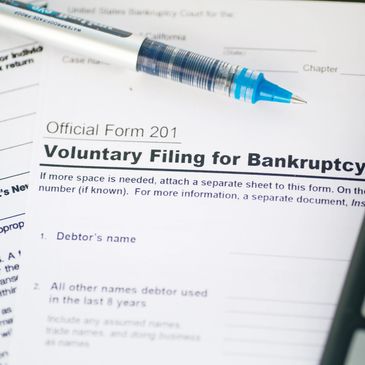
Bankruptcy Basics
Credit Counseling and Debtor Education Information
Credit Counseling and Debtor Education Information
Bankruptcy law is a federal law. The Bankruptcy Information Sheet (available on this page) gives you some general information about what happens in a bankruptcy case.
Source: U.S. Trustee Program

341 Meeting Information
Credit Counseling and Debtor Education Information
341 Meeting Information
The “meeting of creditors” also known as a “341 meeting,” is a required step in the bankruptcy process. It is not a court hearing, and there is no judge. Instead, the meeting is conducted by a trustee. At the meeting, the debtor (the person who filed for bankruptcy) answers questions under oath about the bankruptcy paperwork that they su
The “meeting of creditors” also known as a “341 meeting,” is a required step in the bankruptcy process. It is not a court hearing, and there is no judge. Instead, the meeting is conducted by a trustee. At the meeting, the debtor (the person who filed for bankruptcy) answers questions under oath about the bankruptcy paperwork that they submitted. The debtor may also be asked about their property, debts, income, and expenses. Creditors may join the meeting and ask the debtor questions, too.
Source: U.S. Trustee Program